

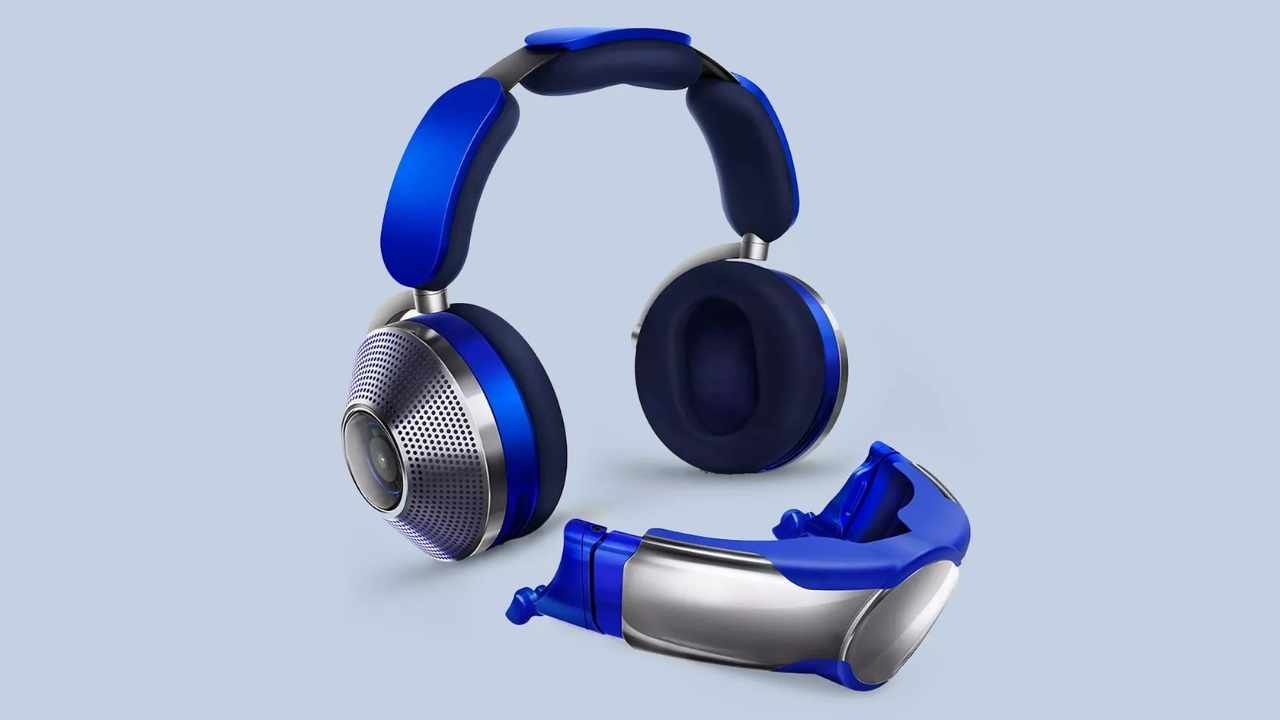
Dyson Zone 2: Dyson, a British tech giant known for its cutting-edge designs in home appliances, has taken another step into the world of wearable technology with the release of the Dyson Zone 2. This product will be available worldwide in August 2025. This is the new version of the Dyson Zone, which came out in 2023 and surprised people by combining a high-end pair of headphones with a personal air purifier. Dyson has also fixed a lot of the problems that people had with the first generation, in addition to making the recipe better with the Zone 2.
The Dyson Zone 2 is a tech accessory that mixes lifestyle, health, and technology. It is aimed at people who travel a lot, live in cities, and care about their health. It costs $749 (about ₹62,000 in India), which puts it in the ultra-premium range and puts it up against Bose, Apple, and Sony’s expensive headphones. It is also unique in that it can filter contaminated air.
This article goes into great detail about the Dyson Zone 2’s design, functionality, air purification capabilities, smart features, and market positioning in order to explain why it is called the future of urban wearables.
A Bold Redesign: More Comfortable, Sleeker, and Smarter
People didn’t like the original Dyson Zone because it was big and scary, but they did like how creative it was. Dyson worked hard on both the ergonomics and the design of the Zone 2, which is both sleek and useful.
The headset is 15% lighter than the last one because Dyson uses recycled polymers and magnesium alloy. It is still strong, though. The earcups are more padded and slimmer because they are made of memory foam wrapped in vegan leather. This makes them more comfortable to wear for long periods of time. The detachable visor that cleans the air has also been redesigned to be smaller, more discreet, and foldable so that people can carry it around more easily when they aren’t using it.
One of the most important design features is the modular system. You can wear the Zone 2 like regular headphones, or you can attach the visor to clean the air. The visor is now easier to put on and take off because it has magnetic hinges, which the old model didn’t have. The airflow channels are better hidden now, so they don’t look like a “sci-fi mask” anymore, which used to make people react in different ways.
The Dyson Zone 2, which comes in Carbon Black, Satin Silver, and Graphite Blue, is clearly meant for professional and stylish city riders. All things considered, it’s more than just a gadget; it’s a statement piece that perfectly combines style and function from the future.
Sound Engineering: Where Luxury Meets Audio Performance
Dyson isn’t known for making audio equipment, but the Zone 2 shows that they are serious about high-end sound. The new model uses neodymium drivers with very low distortion to make high-fidelity sound that is as good as Apple’s AirPods Max or Sony’s WH-1000XM5. This is based on what was learned from the first Zone.
Active Noise Cancellation (ANC) has also gotten a lot better. The 12 microphones in the Zone 2 work together to block out up to 40 dB of outside noise. They automatically change to fit different situations, like crowded streets, subway trains, and airplanes. Dyson calls this feature Adaptive ANC 2.0, and they say it’s the most advanced on the market.
The headphones support Hi-Res Audio, LDAC, and aptX Adaptive codecs, so audiophiles can listen to music without losing any quality. A new 24-bit DAC makes sure that all frequencies are clear. Also, Active Noise Cancellation (ANC) has gotten a lot better. The 12 microphones in the Zone 2 work together to block out up to 40 dB of outside noise. They automatically change to fit different situations, like crowded streets, subway trains, and airplanes. Dyson calls this feature Adaptive ANC 2.0 and says it is the most advanced on the market.
The battery life is another great thing. Without air purification, the Zone 2 can play for 50 hours straight, which is a big improvement over the first generation’s 30 hours. Even with air purification on, users can expect about 18 hours of combined use. This is more than enough for getting to work every day or going on a trip abroad. Fast charging lets you use it for eight hours in just fifteen minutes.
Breathing Clean: New Technology for Cleaning the Air
The personal air purification system in the Dyson Zone 2 is what makes it different from other headphones. Dyson, a company that makes air purifiers and vacuum cleaners, has used its expertise well here.
The earcups of the Zone 2 have two filters: one that uses tiny fans to pull in air and another that uses electrostatic filters to get rid of 99% of particles as small as 0.1 microns. This includes things like smoke, dust, pollen, and even some gases that are bad for you, like nitrogen dioxide. Dyson has made changes to the system so that it can specifically target air pollution in cities, which is a growing global health problem.
To make a “bubble” of clean air without touching the user, the filtered air is then sent through the detachable visor in a controlled flow that stays close to the user’s mouth and nose. The Zone 2’s better airflow channels make the purification process almost silent by reducing noise and vibration.
The new filters last up to 18 months, and the Dyson app has a smart replacement alert system that lets you know when it’s time to change them. This is a big improvement over the first generation, which needed to be changed every 12 months. The Zone 2 is not only convenient, but it also improves the health of people who live in polluted cities like Delhi, Beijing, or New York, as well as people who travel a lot and breathe recycled cabin air. In short, Dyson is turning headphones into a personal health tool, which is something no other company has done on this scale.
Smart features and AI-powered connections
The Dyson Zone 2 has so many features that it feels more like an ecosystem of wearable technology than just headphones. The headset works with the Dyson Link App to give you real-time, detailed information about the air quality. Users can check the levels of PM2.5, PM10, and NO2 pollution on their phones and see how much exposure they have avoided while in Zone 2. The app has audio features like ANC customization, granular EQ controls, and a way to check the health of your hearing that warns you when the volume is too high.
Dyson has also added adaptive features that use AI. For example, the headset can switch from Air Purification + ANC mode to basic Audio Mode on its own in noisy, dirty places and back again in quieter, cleaner places. Built-in sensors let you control things with gestures, like sliding your finger on the earcup to change the volume or tapping twice to answer calls. Voice assistant integration with Siri, Google Assistant, and Alexa works well.
It’s interesting that Dyson has also added a Wellness Mode, which combines technology, relaxation, and health by playing calming soundscapes and guiding users through breathing exercises while changing the airflow.
When you think about it, the Zone 2 is a big step forward because it combines environmental monitoring, health tracking, and artificial intelligence into one wearable.
Usability, comfort, and everyday usefulness
People didn’t like the first Dyson Zone because it was too big to use every day. In response, Dyson has made Zone 2 more comfortable and useful. The updated headband evenly spreads the weight, and it now weighs 325 grams, which is less than it used to. The earcups turn naturally, which makes it easier to fold them up and put them in the small carrying case that comes with them. The visor is also much less noticeable because it folds up into a slim shape that fits inside a pocket-sized pouch.
Dyson has added a feature called “Transparency Mode” for people who ride the bus or train every day. It lets outside sounds, like traffic or announcements, in without having to take off the headset. Users can still enjoy high-quality audio without cleaning by quickly taking off the visor when they go into cleaner areas. The Zone 2 is also very durable. It can handle sweat and light rain thanks to its IPX4 water-resistance rating, which is important for people who live in cities. The vegan leather pads can be replaced, which makes the device last longer. In short, Dyson has fixed the problems that made the first version of the Zone 2 unusable and turned it into a product that is both creative and useful for everyday use.
Positioning in the market and competition
The Dyson Zone 2 is firmly in the ultra-premium market at $749 (about ₹62,000). The Apple AirPods Max costs about ₹59,900, while the Sony WH-1000XM5 costs ₹34,990 in India. It’s clear that Dyson is competing with these big names in audio while also standing out with its air purification.
Wearable air purifiers and medical devices are its main competitors, along with headphones. In cities with a lot of pollution, standalone portable purifiers cost between ₹15,000 and ₹25,000. None of them have AI and audio like Dyson does. Dyson has a first-mover advantage in a market it practically created because of how it is positioned.
Zone 2 is likely to attract rich professionals, tourists from other countries, and health-conscious millennials. Its high price may keep it from being widely used, but it could make Dyson a leader in wearable health technology, just like the Apple Watch did for smartwatches.
Dyson’s approach here is simple: instead of just competing on sound quality, it is expanding the range of what headphones can be.
Conclusion: A Look at What Wearables Will Be Like in the Future
The Dyson Zone 2 is a new type of wearable tech that combines health, entertainment, and being aware of the environment. It is not just a new pair of headphones. It sets a new standard for innovation with its bold new look, high-quality sound, advanced air purification, and smart features powered by AI. Yes, it is expensive. It is a niche, that’s for sure. The Zone 2, on the other hand, seems ahead of its time because pollution in cities is getting worse and people want devices that can do more than one thing. It shows a future where headphones are used for more than just music, like for health, personalization, and fitting into a person’s lifestyle. The Dyson Zone 2 is something truly unique for those who can afford it: it helps you live smarter, breathe cleaner, and listen better. As more companies follow Dyson’s lead, we may look back on 2025 as the year that wearable technology went from being smart to being truly holistic.