

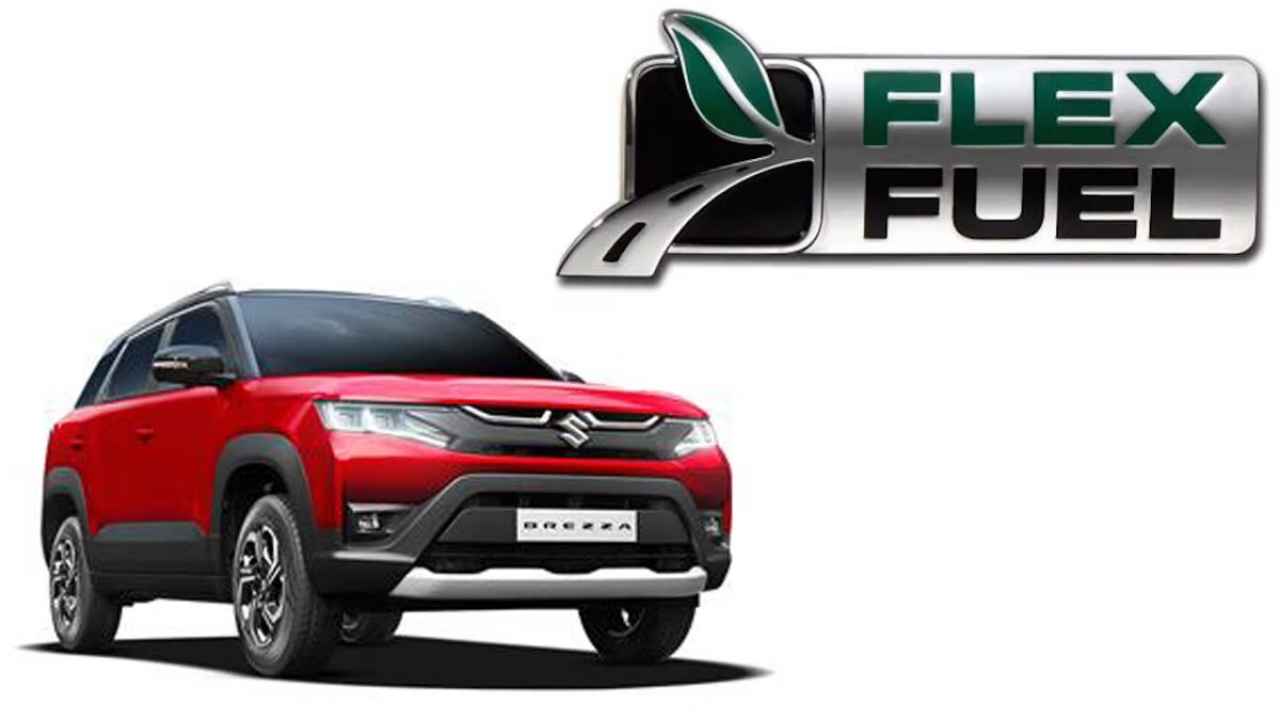
Suzuki’s Flex-Fuel Cars: The car industry in India is changing dramatically. In recent years, discussions have moved beyond performance and design to include sustainability, environmental responsibility, and fuel efficiency. Although EVs have been the talk of the town, there are other ways to lessen reliance on fossil fuels. Flex-fuel technology is currently another formidable competitor that is gaining popularity in India.
By FY26, Suzuki Motor Corporation plans to introduce flex-fuel vehicles in India through Maruti Suzuki, its Indian subsidiary. The government’s goal of blending 20% ethanol (E20) into gasoline by 2025, India’s drive for ethanol adoption, and the rising demand for reasonably priced alternatives to conventional ICE (Internal Combustion Engine) vehicles are all in line with this action.
Suzuki’s choice may usher in a new era for the Indian auto industry by providing a link between traditional gasoline engines and the more costly EV ecosystem.
A New Era in Indian Mobility
India is home to one of the biggest car markets in the world, but it also faces many difficulties. Policymakers and automakers are being forced to consider alternatives to conventional fuels due to the rise in crude oil imports, the deterioration of urban pollution, and the growing demand for sustainable mobility solutions. Even though EVs are gradually becoming more popular, India still lacks the infrastructure for charging them, a developed supply chain, and affordable prices to make them a mass-market option.
Flex-fuel technology is useful in this situation. Flex-fuel vehicles can run on gasoline mixed with ethanol, which can be distributed through the current gasoline pump network with only minor adjustments, in contrast to electric vehicles (EVs), which need completely new infrastructure. In the Indian context, this offers flex-fuel a significant advantage in terms of affordability and scalability. Suzuki’s entry into this market is more than just the introduction of a new product; it is a declaration of intent that the company is getting ready for India’s green transition in its own unique manner.
Flex-Fuel Vehicles: What Are They? Outlining the Idea
Flex-fuel vehicles (FFVs) are made to run on a blend of gasoline and ethanol in different ratios, from 20% ethanol (E20) to 85% ethanol (E85). They have electronic fuel injection systems and modified internal combustion engines that can automatically determine the fuel’s ethanol-to-petrol ratio and modify combustion accordingly.
The primary sources of ethanol, an alcohol-based fuel, are corn, sugarcane, and other biomass. Given India’s robust agricultural foundation, sugarcane ethanol is the main focus. Adoption of flex-fuel has the straightforward but effective goals of lowering carbon emissions, giving farmers a market, and reducing reliance on imports of crude oil.
In nations like Brazil, where ethanol blending levels are significantly higher than in India, flex-fuel vehicles are already widely used.
Why FY26 Is Important for Suzuki’s Flex-Fuel Strategy
In India, Suzuki has set FY26 as the goal year for the introduction of flex-fuel vehicles. There are two reasons why this timeline is important.
First, by 2025, the Indian government has made it mandatory for all gasoline sold in the nation to be E20. Manufacturers must make sure that this blend works with their engines. Suzuki is developing completely adaptable engines that can operate on higher ethanol blends in addition to E20 compliance.
Second, the company’s broader alternative mobility roadmap aligns with Suzuki’s FY26 deadline. Flex-fuel vehicles will enable Maruti Suzuki to provide a more cost-effective green alternative to consumers much sooner, even as the company is progressively embracing hybrid technology and testing EVs like the eVX.
Suzuki is reportedly creating E85-compatible vehicles for the Indian market, which would be a first for the general public. Flex-fuel versions of Swift, Baleno, Brezza, and even Ertiga models may be available by FY26. The majority of these vehicles’ features and designs will be similar to those of current gasoline models, which will increase their familiarity and accessibility for Indian consumers.
Government Encouragement of Alternative Fuels and Ethanol Blending
Ethanol blending has been actively promoted by the Indian government as part of its National Biofuel Policy. The government’s commitment to this initiative is demonstrated by the five-year advance of the goal of 20% ethanol blending (E20) by 2025.
Ethanol is seen by the government as an economic tactic as well as a fuel. India’s economy is susceptible to fluctuations in the price of crude oil due to the billions of dollars it spends annually on imports. However, domestic production of ethanol from crops like sugarcane can lessen reliance on imports and give farmers extra revenue.
Additionally, the government is pushing automakers to create ethanol-ready vehicles, providing subsidies for the production of ethanol, and encouraging oil marketing companies (OMCs) to establish blending facilities. Since Suzuki’s move to introduce flex-fuel vehicles is in complete accordance with these regulations, there will be substantial regulatory backing for this shift.
The Function of Flex-Fuel Vehicles in the Indian Ecosystem
Flex-fuel vehicles will perform nearly the same as existing gasoline-powered vehicles for Indian consumers. Their engines will be tuned for ethanol-petrol blends, which is the only distinction. Depending on availability, drivers will still be able to select ethanol-blended gasoline at gas stations in addition to regular gasoline.
Ethanol is frequently less expensive than gasoline in Brazil, where this system is extensively utilized. Consumers may benefit from lower operating costs if India adopts a similar strategy. However, using higher ethanol blends may result in a slight decrease in mileage because ethanol has a lower calorific value than gasoline. With engine optimizations, automakers such as Suzuki are attempting to reduce this disparity.
In terms of the fuel distribution network, India currently has thousands of gas stations, many of which are progressively being upgraded to provide fuel blended with ethanol. In contrast to EV charging stations, which still need significant infrastructure investments, the rollout of flex-fuel vehicles will go more smoothly.
Plans for Suzuki: Automobiles, Technology, and Partnerships
It is anticipated that Suzuki will introduce a number of flex-fuel models rather than just one or two vehicles. Customers from all market segments will be able to experience flex-fuel mobility thanks to this strategy, which will guarantee wider adoption. A Maruti Suzuki WagonR flex-fuel that was on display at the Auto Expo is one of the E85-compliant prototypes that the company has already tested in India. Flex-fuel versions of vehicles such as the Swift, Dzire, Baleno, and Ertiga may be available by FY26.
Suzuki might also work with Indian fuel producers and even governmental organizations to hasten the country’s ethanol supply. Suzuki is the biggest automobile manufacturer in India, so its participation might also persuade rivals like Hyundai, Tata, and Honda to expedite their own flex-fuel initiatives.
Affordability, Mileage, and Operating Costs’ Effect on Customers
Affordability will be one of the main benefits of flex-fuel vehicles. Flex-fuel vehicles will only cost marginally more than their gasoline-powered counterparts, in contrast to electric vehicles (EVs), which are substantially more costly due to battery expenses. As a result, a far wider range of Indian consumers can purchase them.
Depending on the price of ethanol, operating expenses may also be reduced. The cost of ethanol is less influenced by global crude prices because it is produced domestically. Vehicles using higher ethanol blends, however, may use a little more fuel per kilometer due to ethanol’s lower energy density. A car that gets 20 km/l on gasoline, for instance, might get 17–18 km/l on E85. However, the total cost of operating the vehicle may equal or even drop if the price of ethanol drops considerably.
Flex-fuel vehicles might emerge as a desirable substitute for urban purchasers who are concerned about expenses and emissions.
Obstacles to Come: Awareness, Fuel Quality, and Infrastructure
There are obstacles that must be overcome in spite of the promise.
Fuel Availability: Although ethanol blending is being promoted by the government, it will take some time for E85 to be available throughout India. At first, flex-fuel vehicles might primarily run on E20 blends, which would limit their advantages.
Mileage Issues: Even if operating costs stay competitive, consumers may be wary if they believe the mileage has decreased. Here, awareness-raising efforts will be essential.
Engine Durability: Because ethanol is more corrosive than gasoline, special materials must be used in the design of engines and fuel lines. Suzuki must guarantee long-term durability to allay worries about dependability.
Agricultural Dependency: Reliable agricultural output is necessary for the large-scale production of ethanol. The supply of ethanol may be impacted by changes in sugarcane production brought on by climate change or water scarcity.
Which Is Better for India, EVs or Hybrids?
An essential question is brought up by the introduction of flex-fuel vehicles: how do they compare to EVs and hybrids? When it comes to tailpipe emissions, EVs are without a doubt the cleanest choice. They are still pricey, though, and India’s infrastructure for EV charging is still in its infancy. Conversely, hybrids are more expensive but also provide greater fuel efficiency.
Flex-fuel vehicles fall somewhere in the middle. They require less new infrastructure, are less expensive than hybrids and electric vehicles, and are cleaner than cars that run solely on gasoline. This makes them especially well-suited for a nation like India, where affordability and convenience are key factors in mass-market adoption.
Flex-fuel could eventually act as a stopgap measure until EVs are more widely available and reasonably priced.
Impact on the Environment: How Flex-Fuel Lowers Carbon Emissions
Automobiles that run on flex fuel will be crucial in lowering carbon emissions. Compared to gasoline, ethanol is a renewable fuel that emits fewer greenhouse gases when burned. Research indicates that ethanol-blended fuels can reduce hydrocarbon emissions by up to 10% and carbon monoxide emissions by up to 30%.
Additionally, by utilizing agricultural waste and assisting farmers, India’s ethanol production promotes a circular economy. This promotes energy independence and rural development in addition to reducing emissions.
In conclusion, Suzuki’s audacious wager on India’s green future
More than just a product announcement, Suzuki’s plan to introduce flex-fuel vehicles in India by FY26 is a calculated reaction to the country’s economic, environmental, and energy demands. Suzuki is providing Indian customers with an inexpensive route to more environmentally friendly transportation by utilizing ethanol, a resource that is produced locally and is renewable.
Although there are still issues with infrastructure, fuel availability, and perceived mileage, flex-fuel vehicles have the potential to be the next major disruptor in the Indian auto industry with government backing and Suzuki’s market dominance.
Suzuki’s flex-fuel strategy is expected to influence India’s mobility landscape as the nation moves toward a sustainable future, demonstrating that there is no one-size-fits-all approach to green mobility but rather a combination of various technologies.