

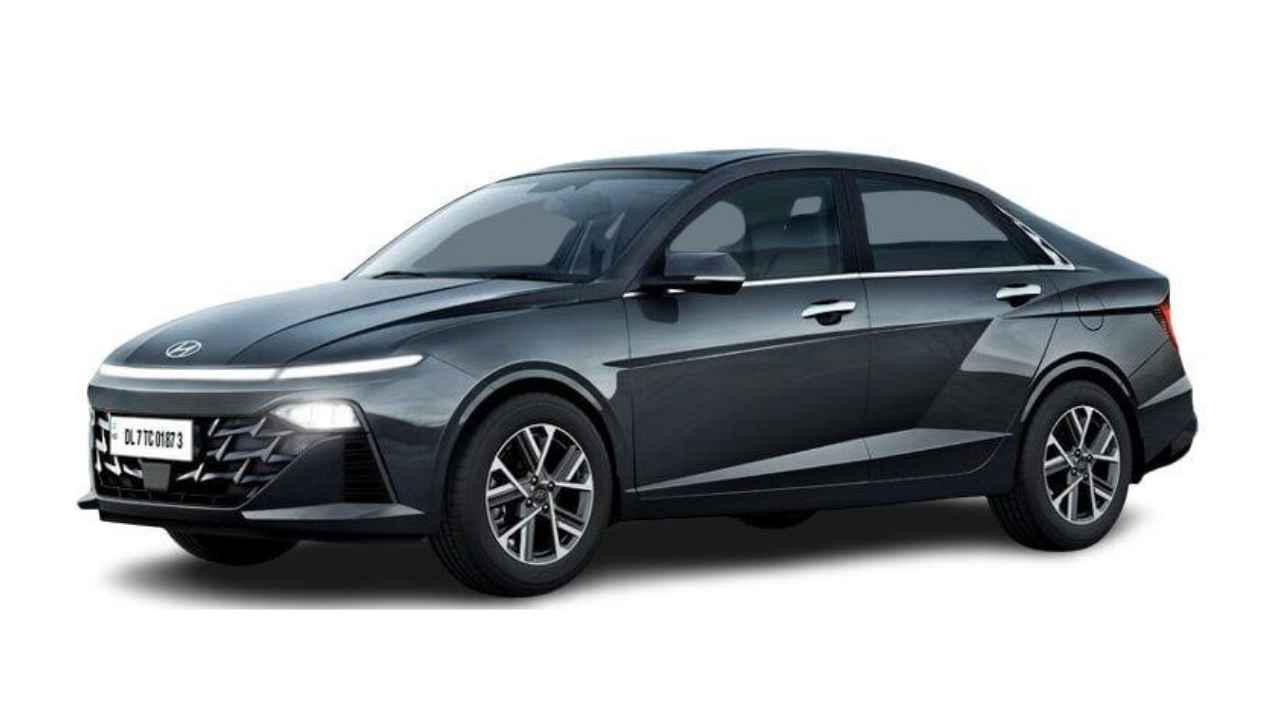
The Hyundai Verna has been a constant presence in the Indian automotive landscape for over two decades, evolving from a simple mid-size sedan to a futuristic and feature-rich powerhouse. Its journey began in 2006, replacing the popular Accent, and each subsequent generation has pushed the boundaries of design, technology, and performance in its class. The latest generation, launched in 2023, is a testament to this evolution, arriving with a bold new identity that challenges the very definition of a sedan. It’s not just a car; it’s a statement of modernity and a clear competitor to the best in the market.
A Design that Demands Attention
The first thing that strikes you about the new Hyundai Verna is its design. It’s a significant departure from its predecessors’ more conventional and “safe” styling. Hyundai’s ‘Sensuous Sportiness’ design language has been taken to an extreme, resulting in a look that is both futuristic and polarizing. The front fascia is dominated by a sleek, full-width “Horizon LED Positioning Lamp,” a striking DRL that gives the car a distinct, almost robotic face. The main LED headlamps are uniquely placed lower down on the bumper, flanking a large, aggressive grille. This split-lighting design is a key element of its identity. From the side, the Verna’s fastback-like silhouette, with its sharply sloping roofline, gives it a sporty and dynamic stance. The Z-shaped character lines on the doors add to this sense of motion. At the rear, the connected LED taillamps echo the front, with the Verna logo subtly embedded within the light strip, creating a high-tech aesthetic that is hard to ignore.
Performance: A Powerhouse in its Class
Under the hood, the Hyundai Verna offers a choice of two robust petrol engines, both tuned to deliver a compelling performance. The first is a 1.5-litre naturally aspirated MPi petrol engine, which produces 115 PS of power and 144 Nm of torque. This engine is the workhorse of the lineup, known for its smooth and refined character, making it an excellent choice for city commutes and relaxed highway cruising. It comes with either a 6-speed manual or an IVT (Intelligent Variable Transmission), offering a seamless and efficient driving experience.
For those who crave more exhilarating performance, the Verna introduces a 1.5-litre Turbo GDi petrol engine. This is the segment’s undisputed leader in power, churning out a massive 160 PS and a peak torque of 253 Nm. This turbocharged unit transforms the Verna into a performance sedan, with a strong mid-range and an impressive top-end that allows for quick overtakes and spirited driving. It is paired with either a 6-speed manual or a 7-speed DCT (Dual Clutch Transmission), complete with paddle shifters, providing a truly engaging and sporty feel. Despite the power, both engines are remarkably fuel-efficient, with ARAI-certified mileage figures reaching up to 20.6 kmpl for the turbo-DCT variant.
An Interior Designed for the Future
Stepping inside the new Verna, you are greeted by a cabin that perfectly complements its futuristic exterior. The interior is a massive step up in terms of both design and technology. The dashboard has a clean, minimalist layout, with a seamless, integrated display unit that houses the 10.25-inch touchscreen infotainment system and the digital instrument cluster. This twin-screen setup feels premium and modern. The ‘Switchable Type Infotainment and Climate Controller’ is a clever and unique feature, allowing users to switch the rotary dials and buttons between controlling the AC and the infotainment system, reducing button clutter.
The Verna is a technology-laden machine. It boasts a long list of comfort and convenience features, including ventilated and heated front seats—a segment-first feature that enhances comfort in varying climates. The two-spoke steering wheel, power-adjustable driver’s seat, and an 8-speaker Bose premium sound system all contribute to a luxurious in-cabin experience. The car has a generous 2,670 mm wheelbase, the longest in its segment, which translates to a significantly more spacious rear cabin with improved legroom and headroom, addressing a previous-generation criticism. The 528-litre boot space is also best-in-class, making the Verna a practical choice for long trips.
Safety as a Top Priority
One of the most significant selling points of the new Verna is its uncompromising approach to safety. Hyundai has equipped the Verna with a comprehensive suite of safety features, setting a new benchmark for the segment. Standard safety equipment across all variants includes six airbags, ABS with EBD, Electronic Stability Control (ESC), and Vehicle Stability Management (VSM).
However, the real game-changer is the Level 2 ADAS (Advanced Driver Assistance Systems) suite, branded as Hyundai SmartSense. This technology is a huge leap forward for the segment and includes features like Forward Collision Warning, Lane Following Assist, Lane Keeping Assist, High Beam Assist, and Smart Cruise Control with Stop & Go functionality. This array of features not only makes driving safer but also reduces driver fatigue, especially on highways. Furthermore, the Verna has achieved a 5-star Global NCAP safety rating, a crucial endorsement that proves its structural integrity and occupant protection, giving buyers peace of mind.
Conclusion
The Hyundai Verna’s latest avatar represents a bold reinvention of the sedan. It has shed its conventional skin to emerge as a car that is not just a mode of transport but a technological and design statement. It competes head-on with established rivals like the Honda City, Volkswagen Virtus, and Skoda Slavia, offering a unique blend of futuristic design, segment-leading performance, a tech-rich and spacious cabin, and a class-defining safety package. The new Hyundai Verna is a compelling choice for anyone in the market for a C-segment sedan, proving that in a world dominated by SUVs, the sedan remains a relevant and highly desirable body style.